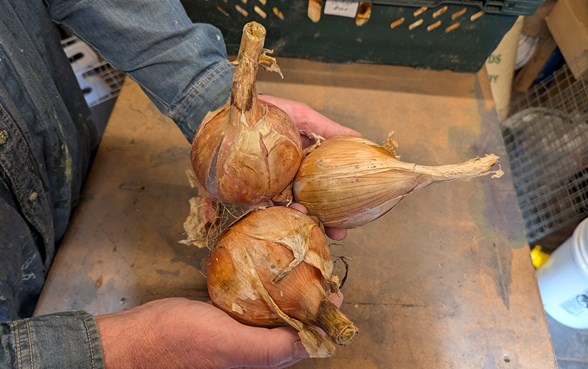
It has been a very good year for the Potato Onion Resurrection project. The headline news is that three onion varieties have now been selected as Named Lines. This means that they are considered to be suitable for vegetative propagation and wider distribution.
All of the Potato Onions in the project have been carefully selected to set seed. A limited quantity of seed is now available and it may now be possible to get some to you.
A new Breeding Methodology has now been formalized and documented. It is expected that this new methodology will continue to generate more Named Lines in future years.
In addition, the project has been moved onto its own dedicated website and has been completely re-written. Previously the project was given a dedicated page on the Longkeeping Apples website - but it was felt that the results were such that it had now outgrown its previous home. The website is called Plant Alchemy (plantal.net).
New Named Lines
A careful survey of the Cohort 25 Group in the autumn of 2026 indicated that three varieties of Potato Onion were suitable for selection as Named Lines. There were two clumps of each onion type and, since they were now in their third year, they were known to have consistently split and formed clumps in two consecutive years. Below are some thumbnails of each Named Line - click on any image to enlarge it.
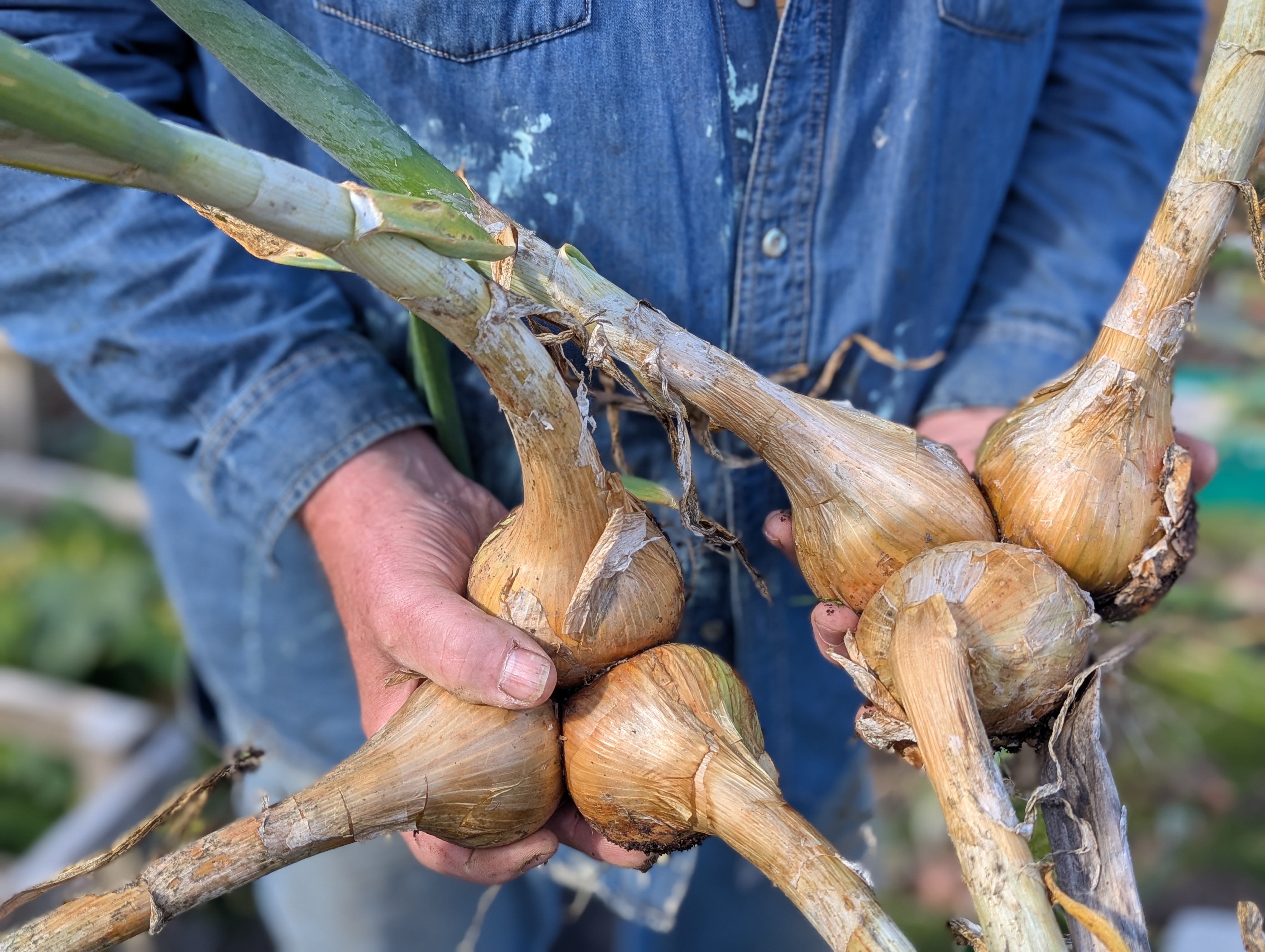
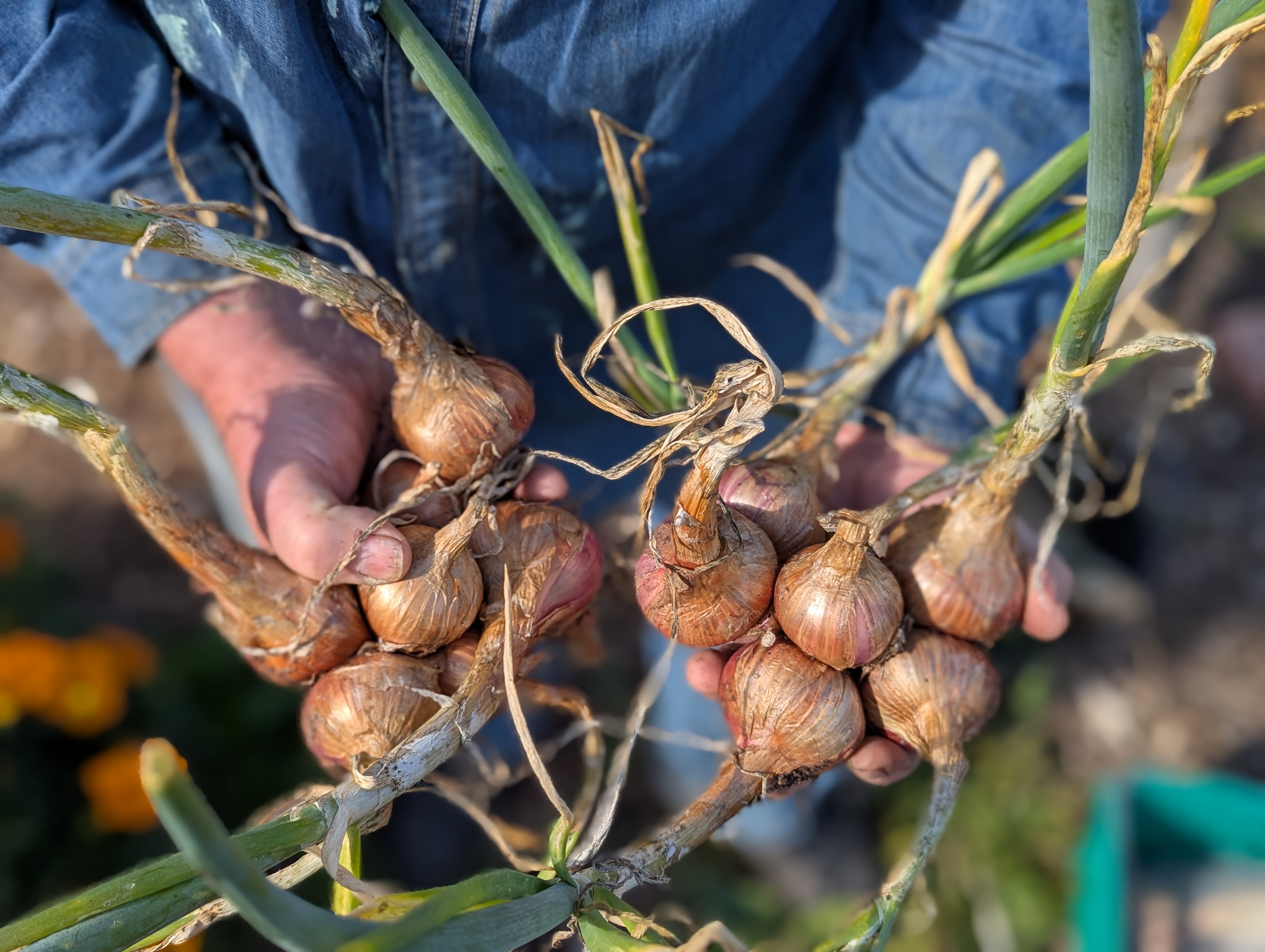
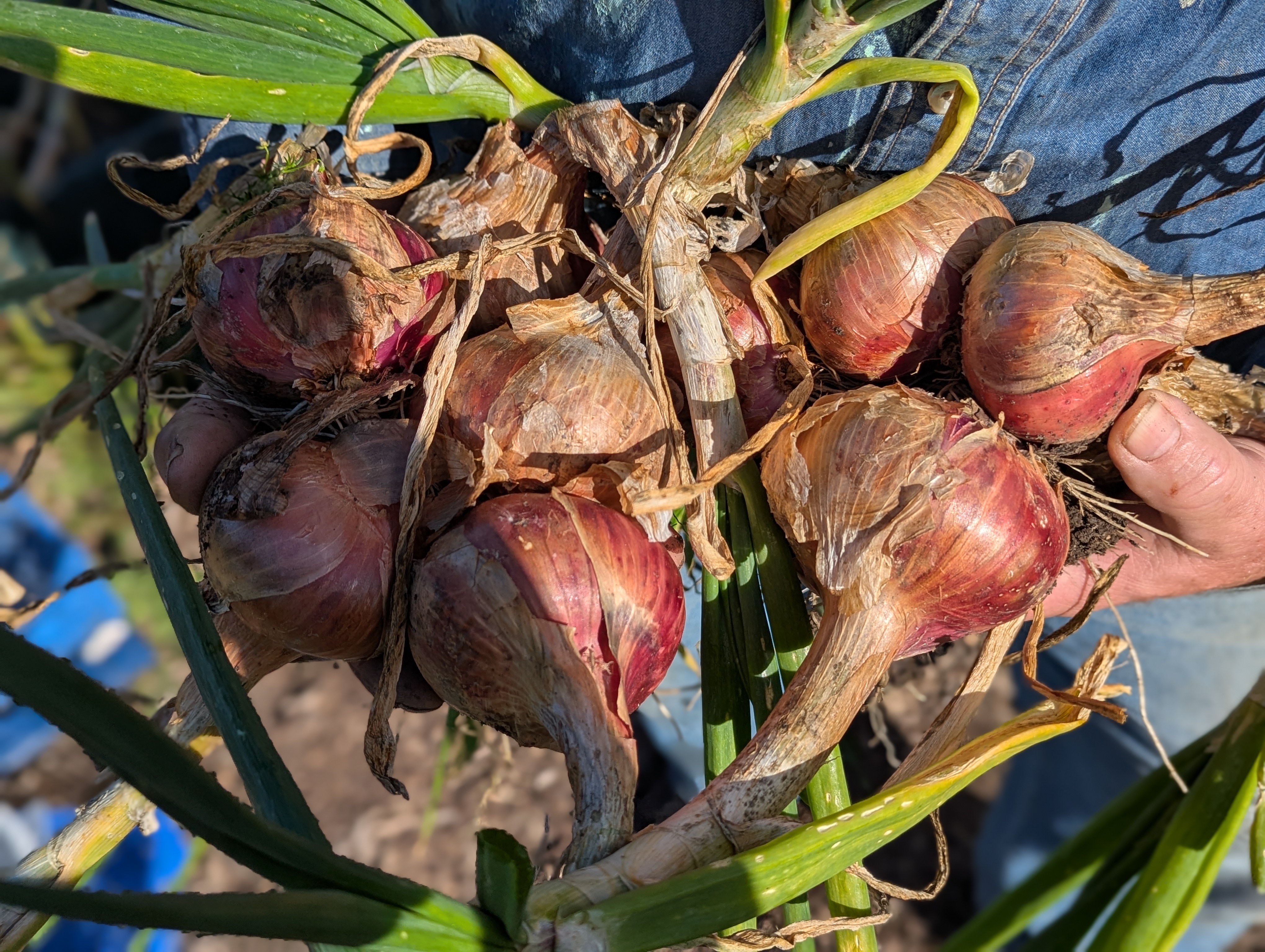
These new onion lines are named Ariel 3, Juliet 7 and Phoebe 5 (respectively) and all will be vegetatively propagated to increase the quantity. Sorry, due to the low numbers at present, it is not possible to distribute bulbs at this time. However, in future years, it is expected that the bulbs will be offered for wider distribution.
Seed Availability
The Potato Onions in the project are carefully selected to vigorously set seed. The breeding methodology has created a Base Group of onions which are incredibly diverse and which also contain a high proportion of the splitty, clumping perennial style genes which can generate new Potato Onion lines. A limited amount of seed may be available. If you follow the propagation methodology it should be possible for you to generate lines of Potato Onions as good, if not better, than any of the named lines produced by this project to-date (it will take a couple of years though).
A New Breeding Methodology
The steps involved in the breeding and selecting of new Named Lines have evolved over time. In the early years the primary goal was directed towards building a stock of onions with Potato Onion style characteristics which would also readily set seed. Once that was achieved, the method then focused on improving the diversity of the breeding stock by strict culling and selection. After that objective was well along, the method was again adapted and the production of interesting varieties became the target.
The mature breeding methodology has now been formalized and written down. You can find a comprehensive discussion of it here: Breeding Methodology. Please note that this methodology may not be applicable to other projects. Although this methodology is working well now, it only became a viable option once a Base Group of prolific seed setting onions with the desired characteristics became available. If your project does not have that then the described procedure might need to be adapted as appropriate.
A Dedicated Website
If you are reading this you have found the new website - I hope you like it.
The site name is Plant Alchemy. Although it only contains information on the Potato Onion Resurrection project at the moment, the hope is to use it to document my other open source plant breeding projects as well. I have a number of these - including the early stages of a Perennial Kale breeding project I have high hopes for.
Let's Talk Onions
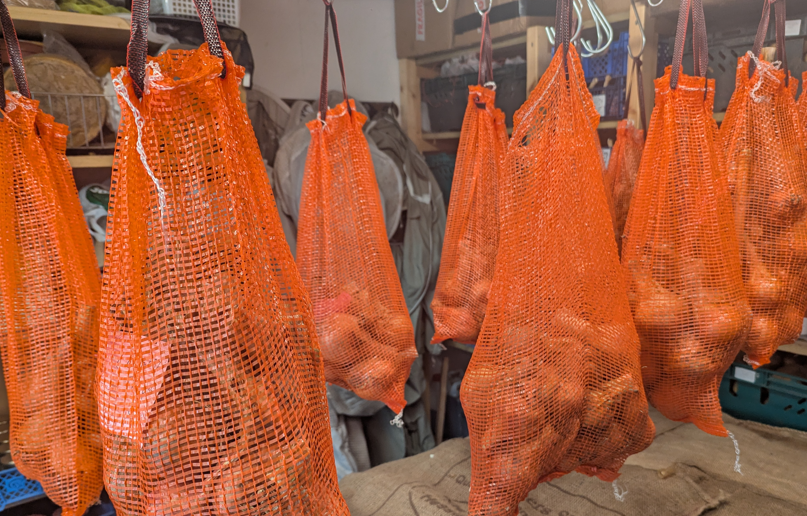
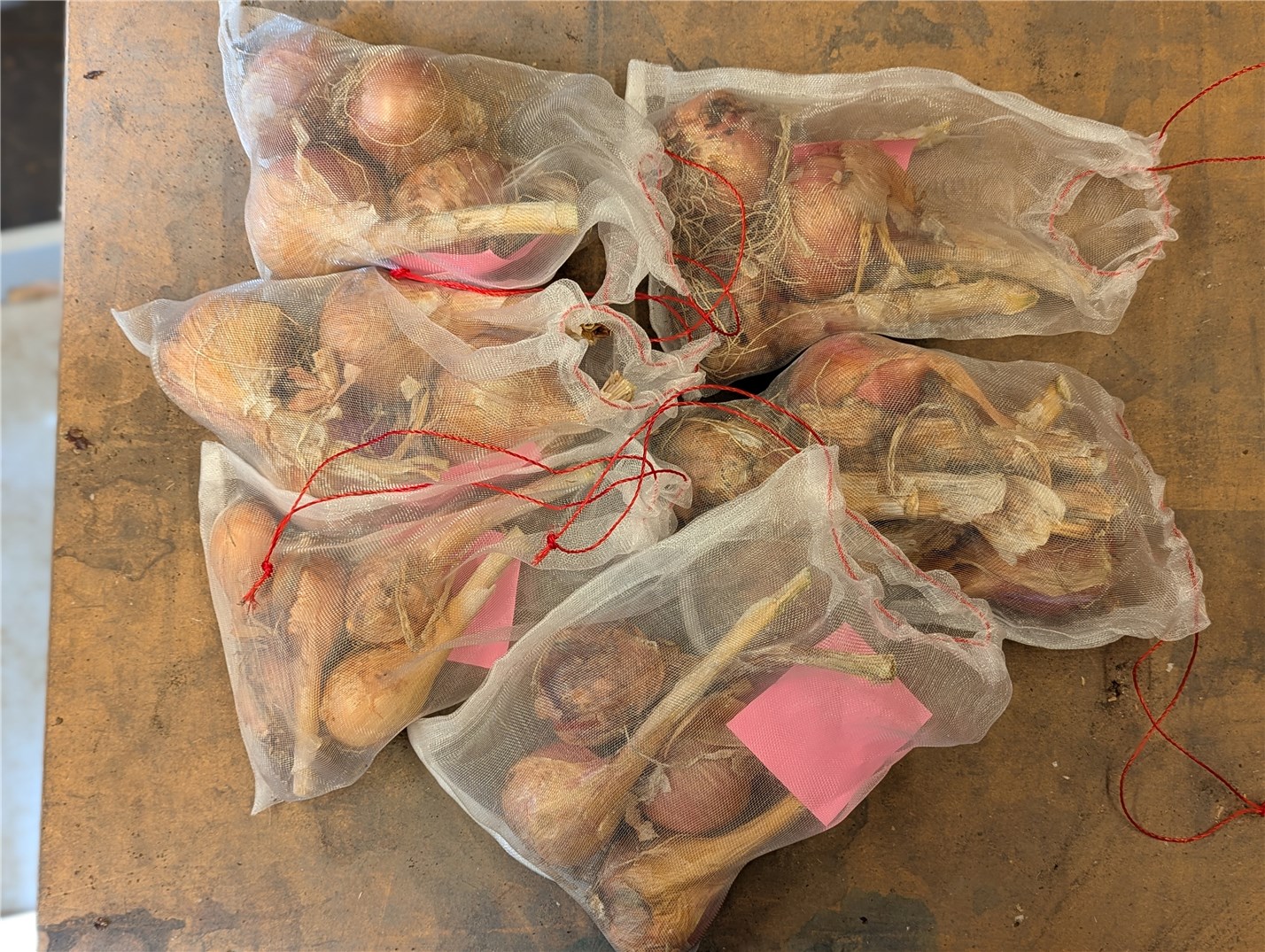
2026 Potato Onions In Storage
As you can see from the picture above, the project has generated quite a number of onion bulbs this year. Each bag contains part of a Cohort of Potato Onions. I will not be able to show photos of them all but I will post images of some representative samples.
If you are familiar with the new breeding methodology, you will know that there are now four different cohorts (onion groups) in progress at any one time. At the end of the 2026 season, they are: the Base Group, the Category 1 onions, the Cohort 26 onions and the Grand Cohort. In addition, some of the more interesting clumps of Cohort 26 have been separated out and placed in individual bags.
Category 1 Onions
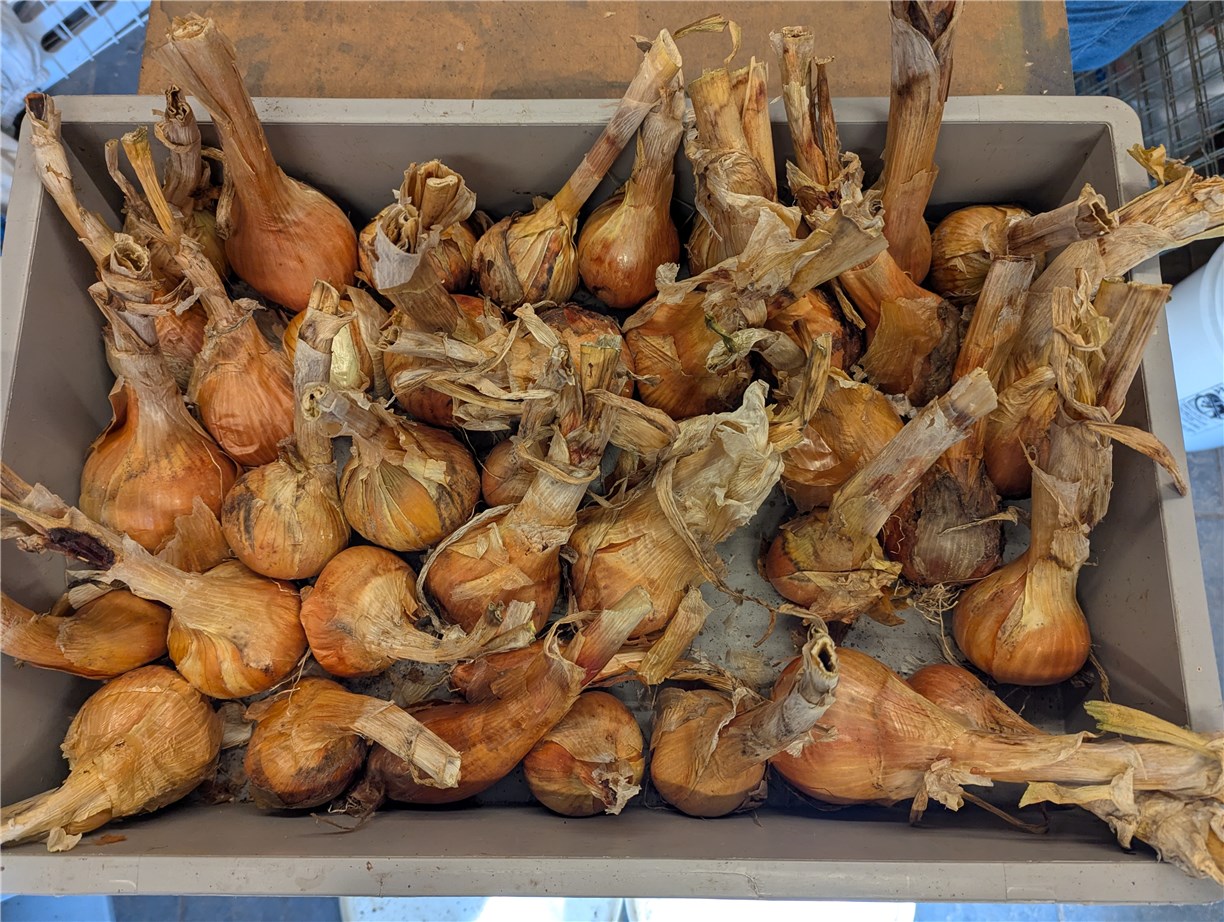
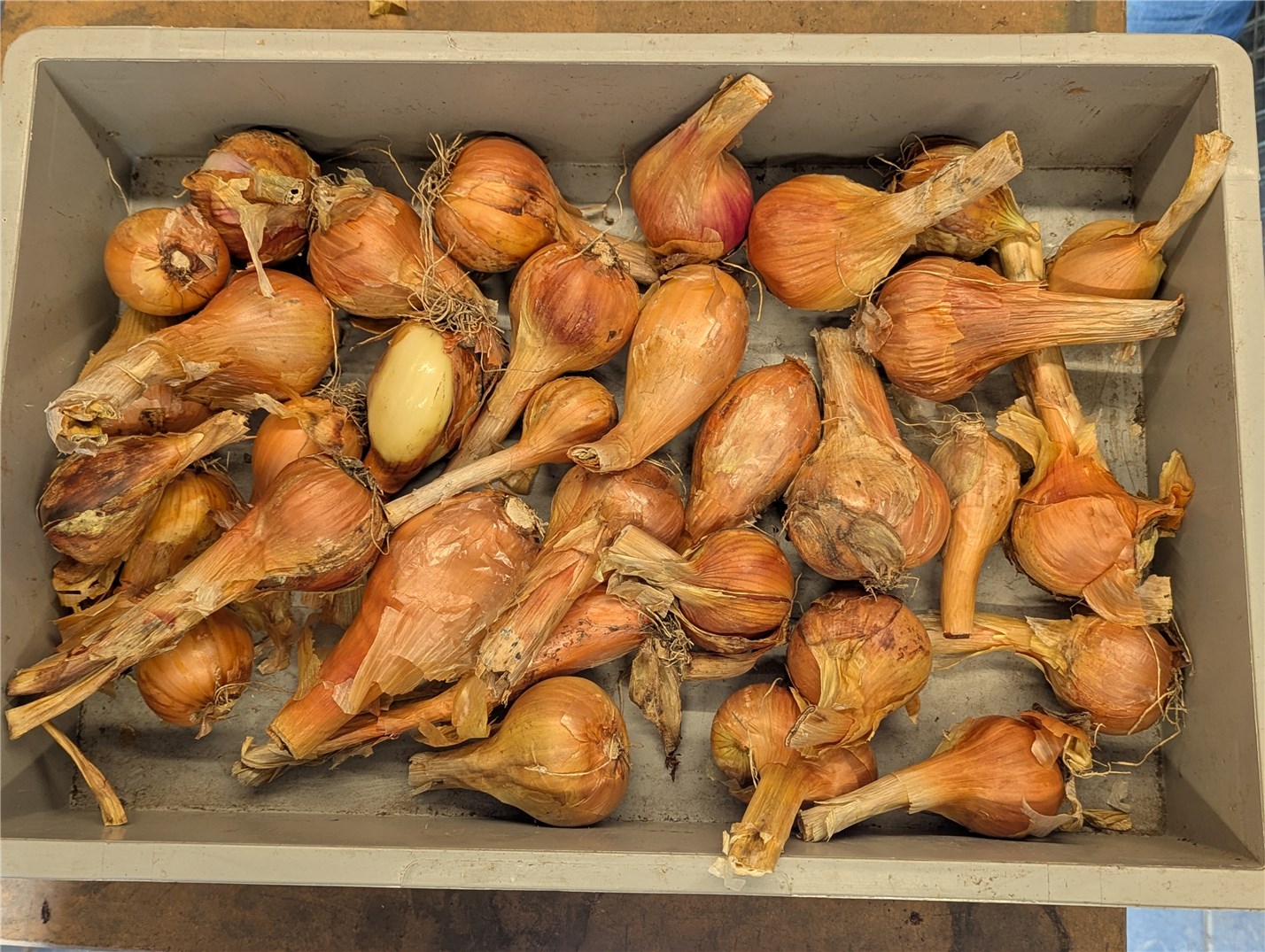
The Category 1 Potato Onions are Onions which were grown from seed planted in the spring of 2026. As you can see, there is a considerable amount of diversity in sizes and colors here. These bulbs will be planted out in the spring of 2027 and typically about 75% of them will split and exhibit Potato Onion characteristics. The survivors of the culling process will be known as Cohort 27 next year. The images on the left and in the middle show the harvest after culling. The image on the right shows three large single bulb onions. Note that these three bulbs are not a clump - just three large single bulb onions I picked at random to demonstrate their size.
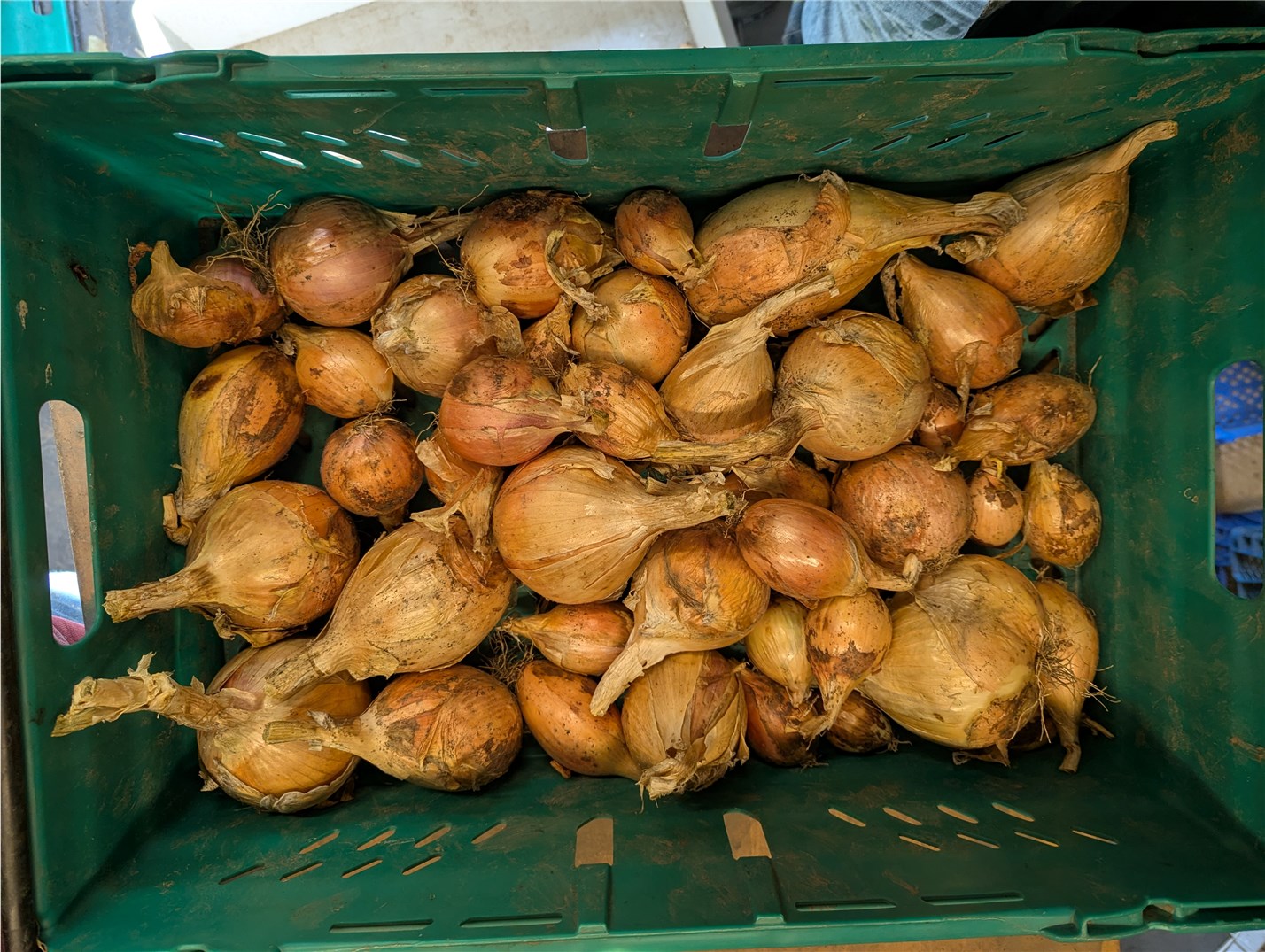
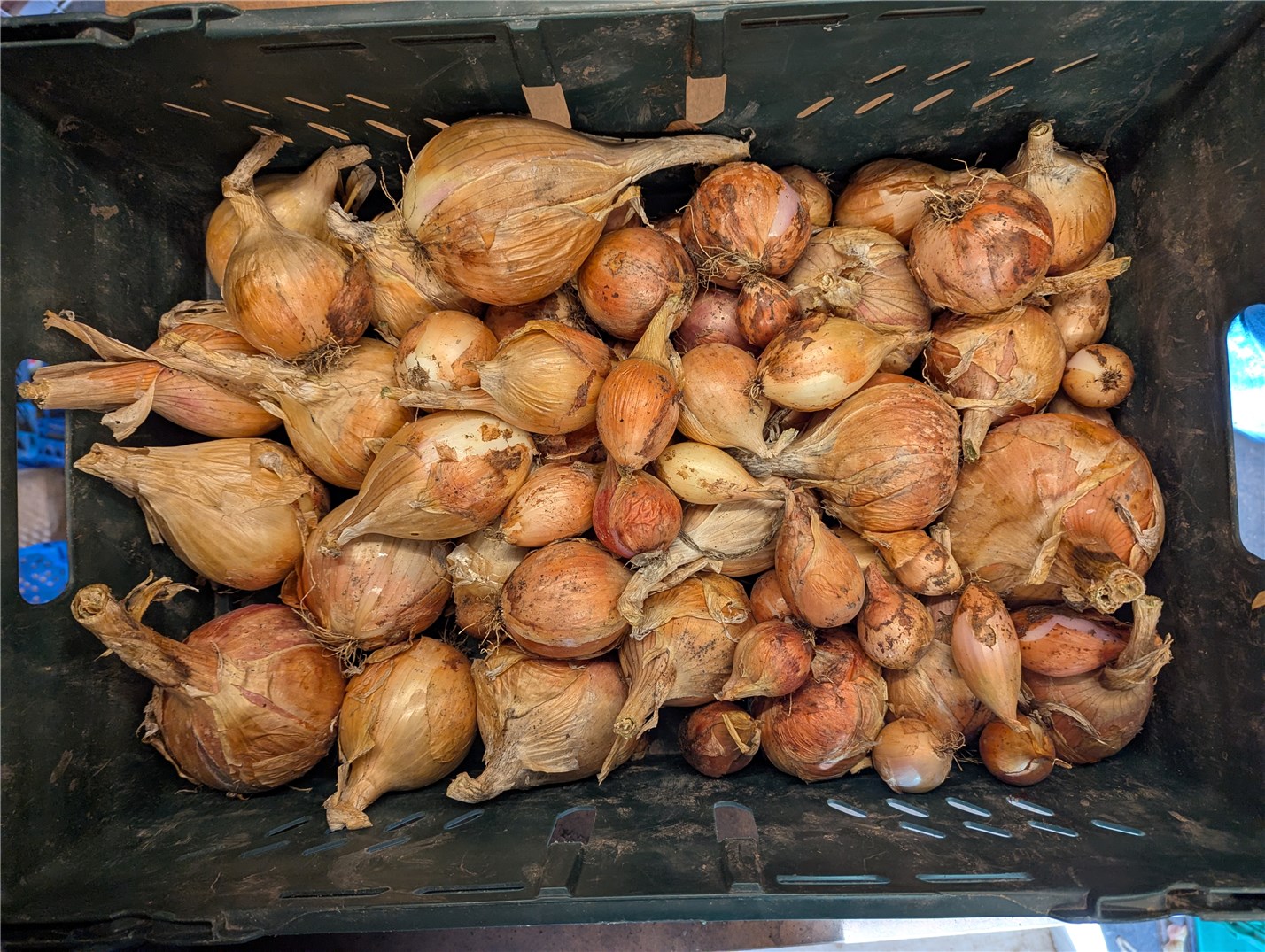
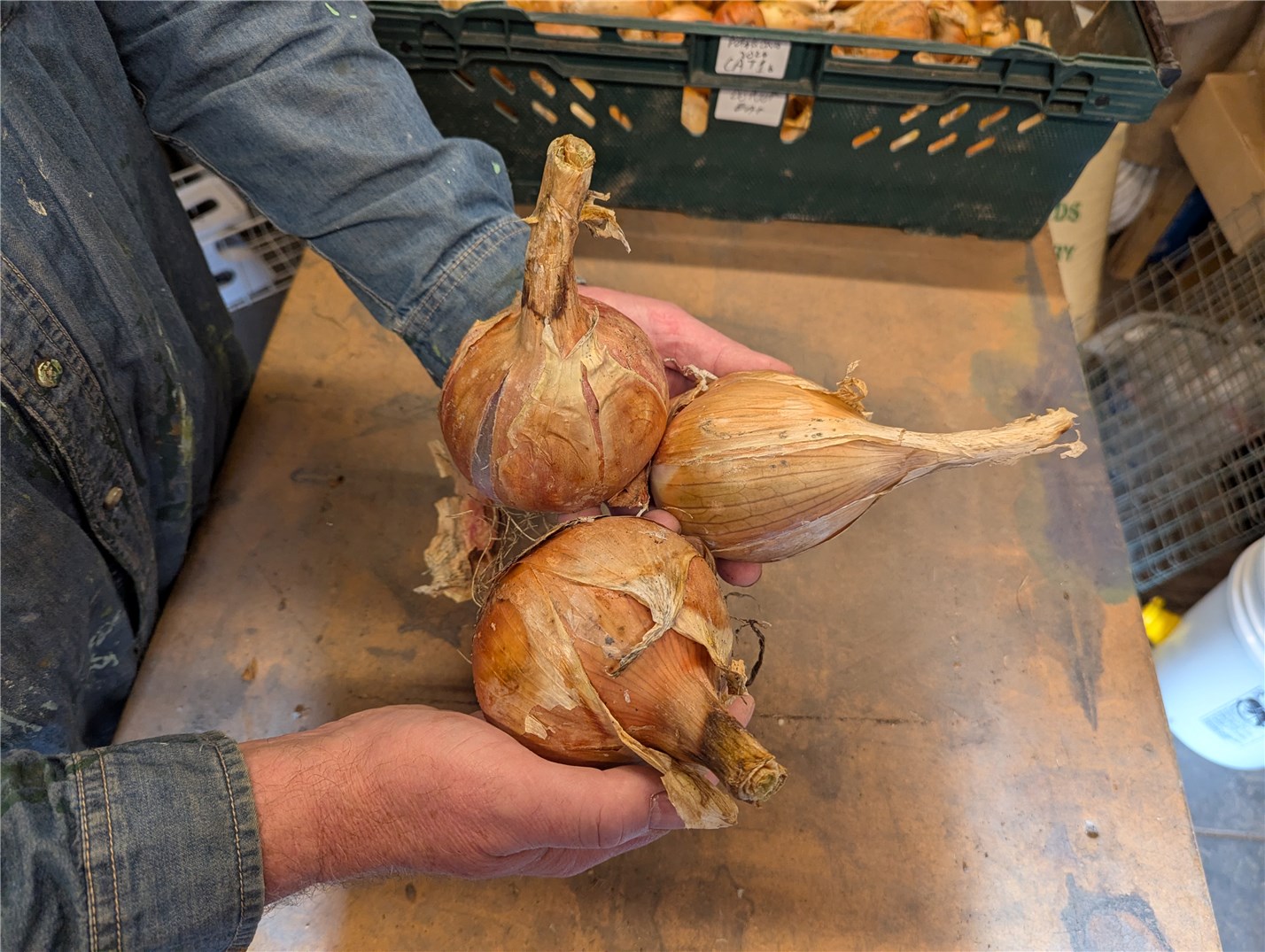
Cohort 26
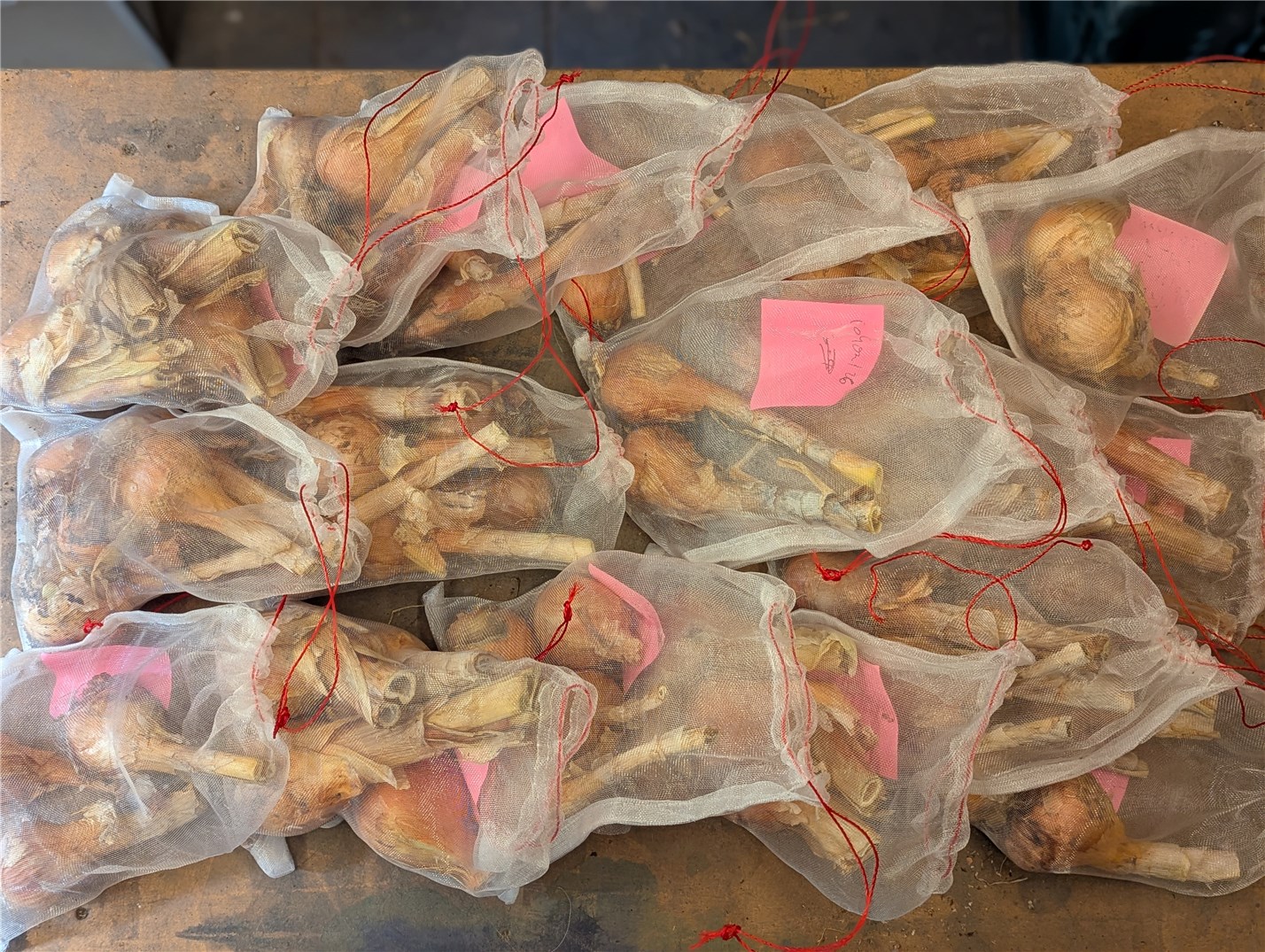
The Cohort 26 Potato Onions reached their second year in 2026. All of these onions have been observed to split and also set seed. The culling process in the breeding methodology is very strict about this. In the leftmost image below you are looking at one bulb from each double clump and, in the middle, a single bulb from each triple clump. In the image on the right you can see many mesh bags - each of which contains a full onion clump. These bags contain the onions which were judged to be "interesting" and they will be planted out together in the spring to 2027. The objective here is to determine whether each bulb in the clump splits again in a similar way. It is from these bags that future Named Lines will be selected. Consistent growth patterns are a key criterion for selection as a Named Line.
The Grand Cohort
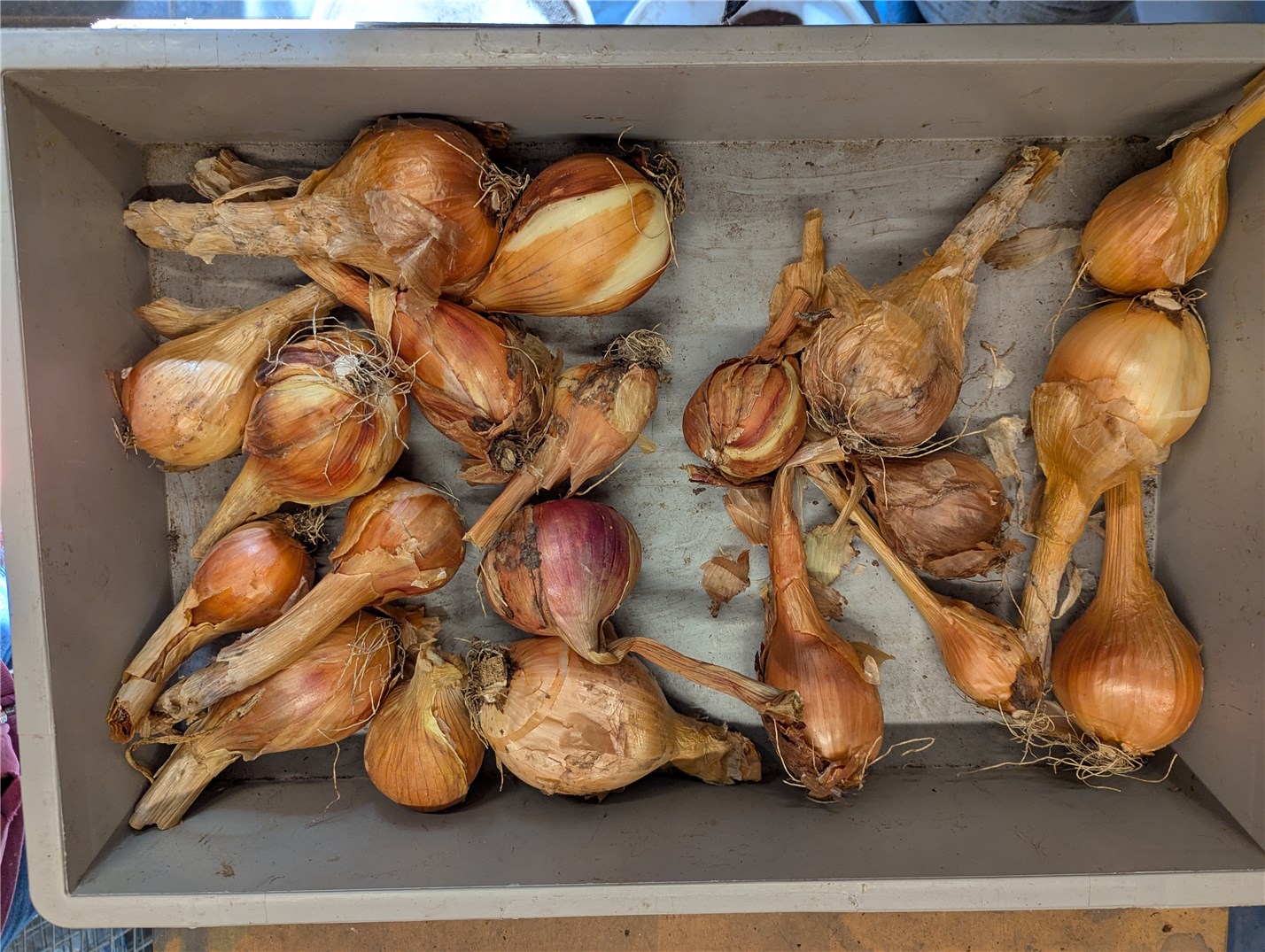
The left image below shows part of the Grand Cohort. This is an assortment of Potato Onions which contains the better bulbs from older Cohorts. For example, much of Cohort 25 will be added to this group in 2026 since all of those onions were now three years old and the Named Lines had already been selected from them. This Cohort still contains many useful onions so I plant them out, let them split and they provide my food. The image on the right shows bags of some of the better clumps from Cohort 25 in the process of being added to the Grand Cohort.
The Base Group
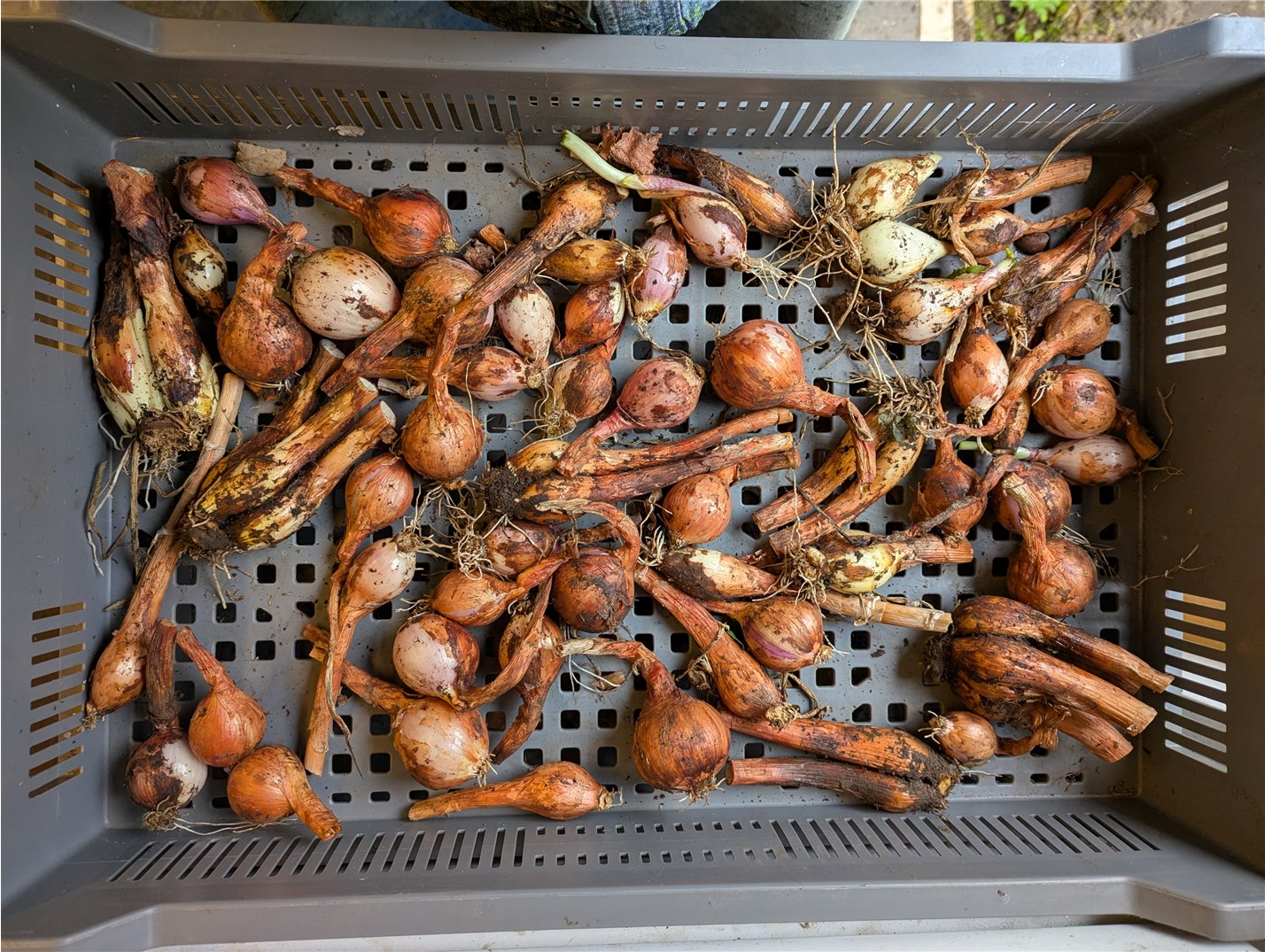
The Base Group of onions are shown below. These are the breeding stock which supplies the seed. Note that these onions all set seed in 2026 (which was harvested) and still split. The setting of seed does not seem to inhibit the splitting or cause the onion to die in the usual biennial manner.
Actually I am a bit surprised by this years Base Group crop. They are all quite small - much smaller than in previous years. I attribute this to the fact that they got shaded out by an enormous beet plant I was also letting go for seed (another project which may appear on this site) and thus received little light. Also, it was a very hot summer and I think the beet took all the water that was put on the bed. I guess it is kind of a tribute to the robustness of the group that they still split, formed reasonable bulbs (if a bit small) and set seed in spite of the poor environment. I will plant the Base Group in a much more favorable position next year and see how they get on.
The Weird and Wonderfuls
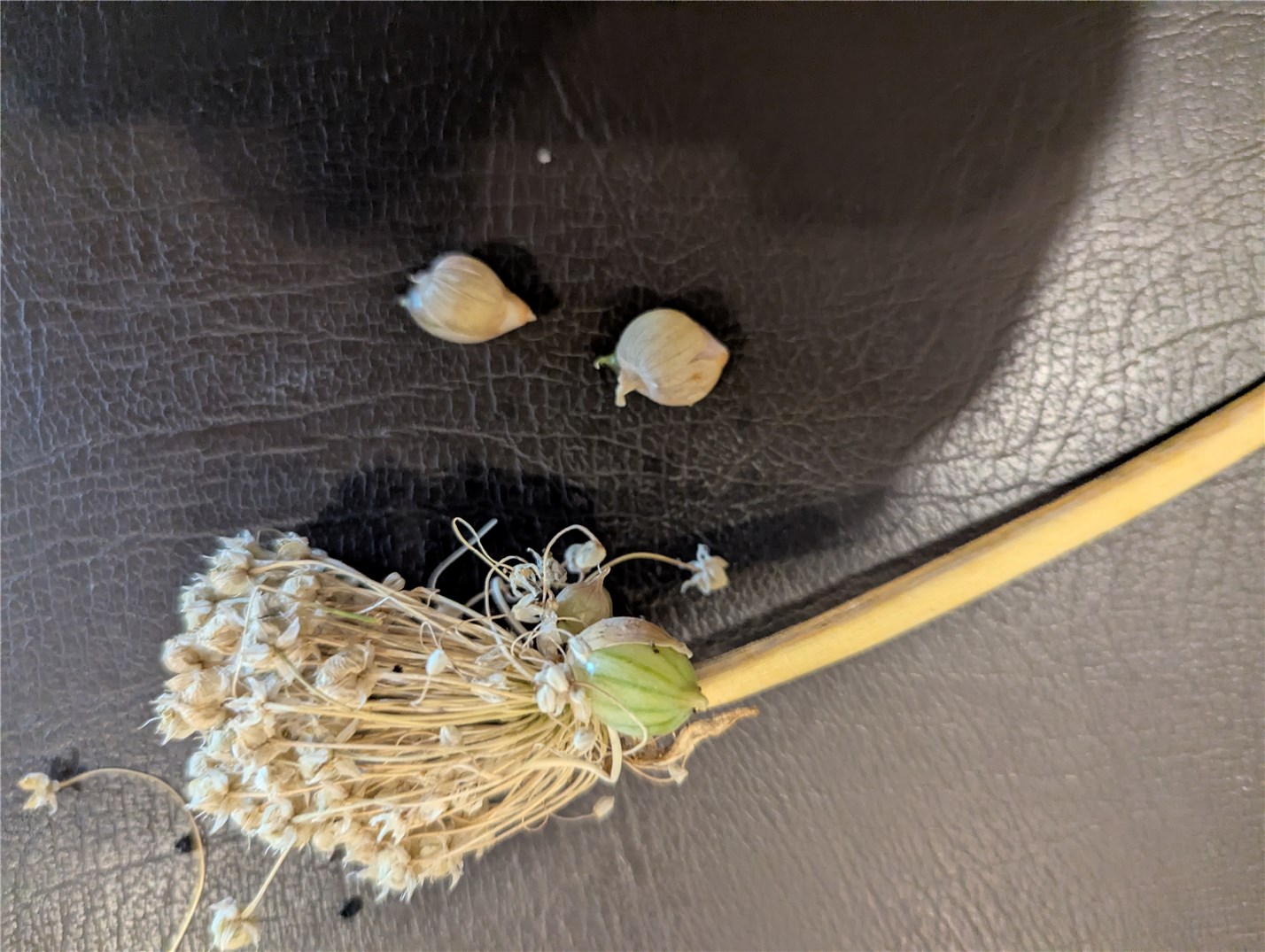
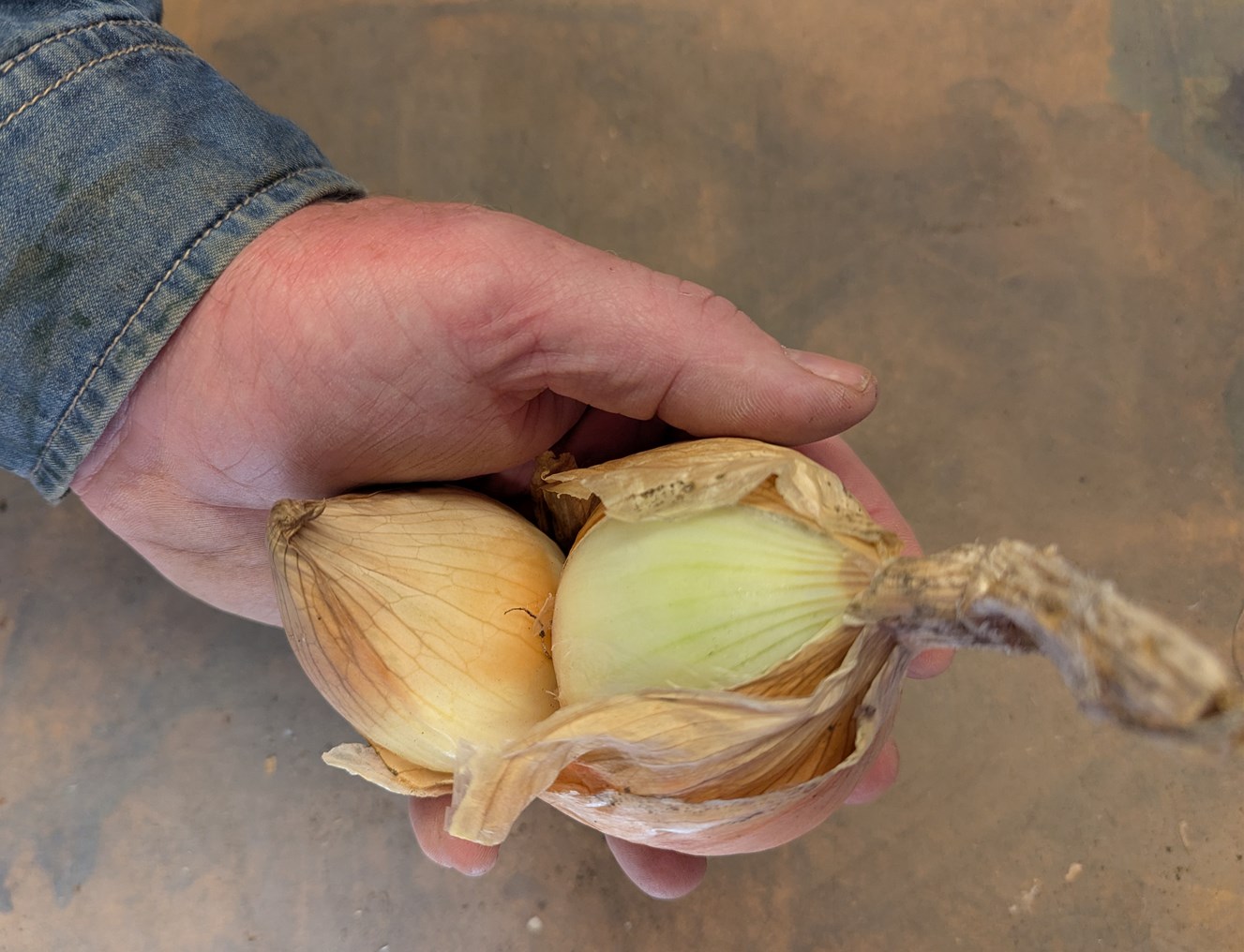
These days almost every season turns up something interesting. In the 2026 harvesting year I again found one seed head with bubils. Also of note was one Category 1 onion that split in the first year despite having been grown from seed (never seen them do that before) and, also, I now have a modest number of reddish onions.
The image below shows the bubils and the seed head they came from. I had previously observed this in a seed head in the 2023 season but, due to my errors, all of the bubils died. In the coming season I shall make a particular point of growing them on and carefully tending them. I don't particularly want top setting Potato Onions - but I'm curious to see what come of this and if the future seed heads will also set bubils. Maybe someone else will find this trait to be useful - if so I will pass them on.
Potato Onions never set seed in the first year. I have been saying that all over the place - so, of course, one has to go and do that just to prove me wrong. The image below is a 2026 Category 1 Onion (first year) that grew into a bulb and also split. It seems that some of the splitty genes in the Base Group are going nuts. I will have to keep an especially close watch on this one - it might turn up some interesting results.
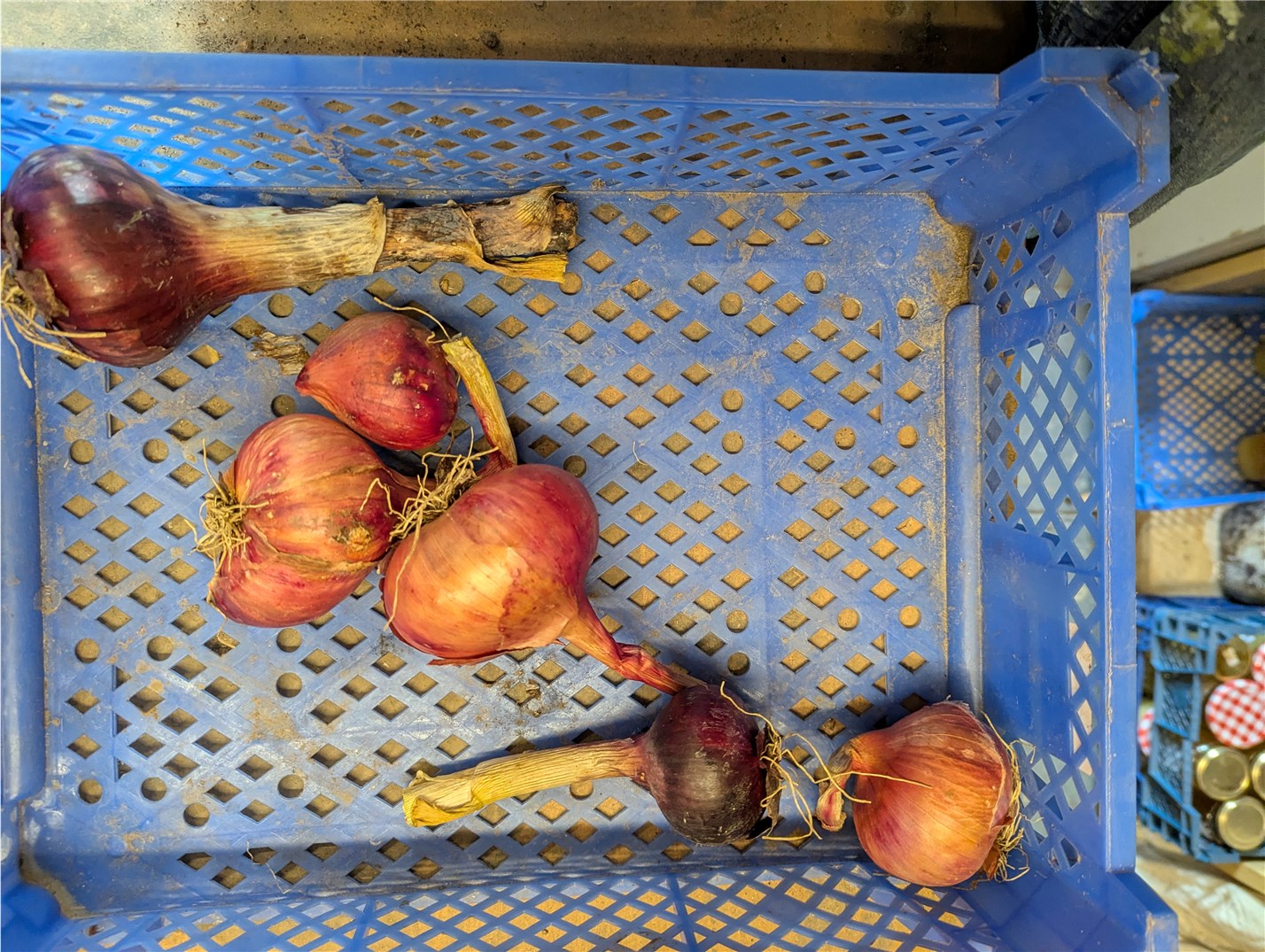
For some reason very few of the Potato Onions produced by the Base Group seed are red. This may be due to the fact that I have not injected as many genes for red color into the mix as I thought or it may be that red coloring is just a really recessive characteristic. In any event, I have found one red Potato Onion that looks kind of splitty and collected a number of other red onions which turned out to be disappointing single bulb onions but which should (hopefully) have some splitty, clumping characteristics. I will let these onions cross with each other separately from the other Base Group onions to see if I can generate some nice deep red Potato Onions in future years. In effect, I will be creating a separate red Potato Onion Base Group. Since I like to name things, I think I will call this the "Red Group".
Future Plans
The Breeding Methodology is now mature and should, hopefully, continue to turn out interesting Named Lines of Potato Onion for years to come. Seed is now available and, hopefully, in future years bulbs will be offered as well. All in all, the project is moving forward quite nicely.
However, even though things have stabilized in one area, that does not mean that one should stop pursuing new goals. I have a friend who has terrible problem with Onion White Rot. He simply cannot get a viable allium to make it through the season. I think I will take a stab at breeding a White Rot resistant Potato Onion. I don't have White Rot (for which I am very grateful) so any breeding program is necessarily going to be remote. However, it seems to me that a White Rot resistant Potato Onion would be a fine and useful thing to introduce.
I would be interested in hearing from anybody who has Onion White Rot and who would also like to participate in such a breeding and testing program. If that's you just go to the About Page and send me an email.
You may also wish to view the 2025 Potato Onion Report and the 2024 Potato Onion Report.